A cinematic fashion story set in desert modernist architecture — curved glass, terracotta, cactus and low golden light.
The starting point was a reference sheet. Before any scene existed, the character was locked: one model, one sequinned look, photographed across nine angles — front, profile, three-quarter, full length, back. That sheet became the source of truth for everything that followed.
From there, the world was built. Each scene places the same character inside a different room of the same house: an entrance hall of curved glass, a lounge with an oval window onto the desert, a low sofa beneath tropical plants. Light, palette and framing stay continuous, so the images read as one afternoon rather than separate frames.
Then the world moved. The film extends the same language into motion, holding the character, the light and the atmosphere frame to frame.
The consistency is the work: locking identity and wardrobe first is what lets a story move across scenes — and from stills into film — without ever losing itself.
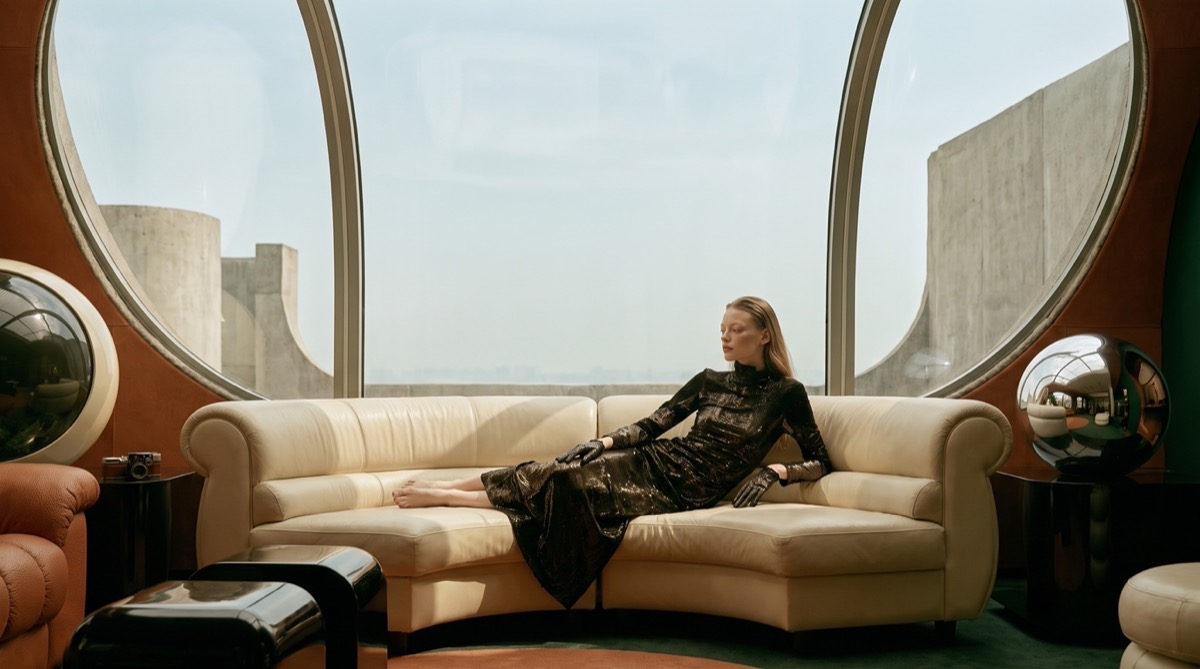
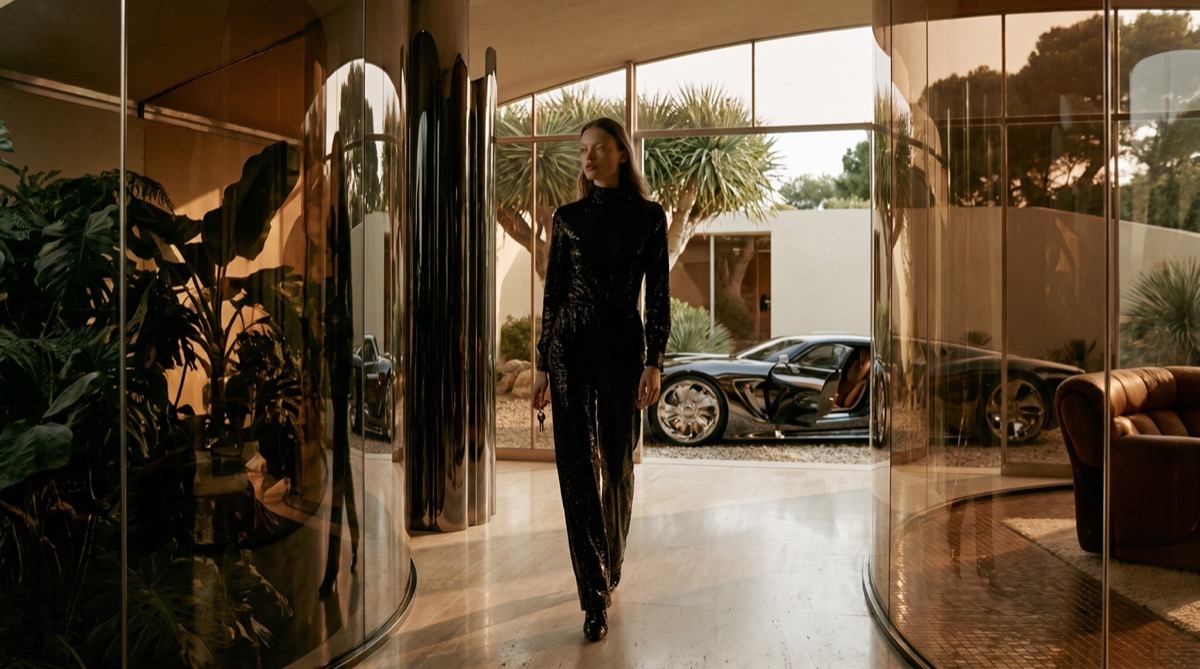
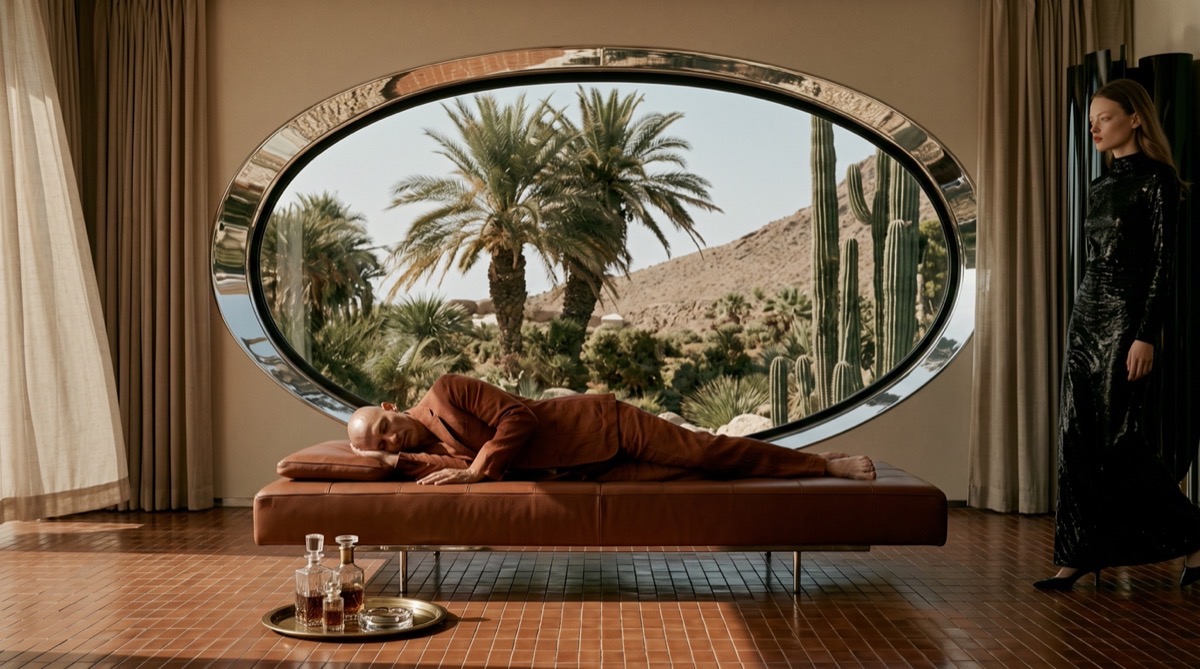
The Stills